Family Wheelwork (YP110 Spring)
–About Family Wheelwork (YP110 Spring)
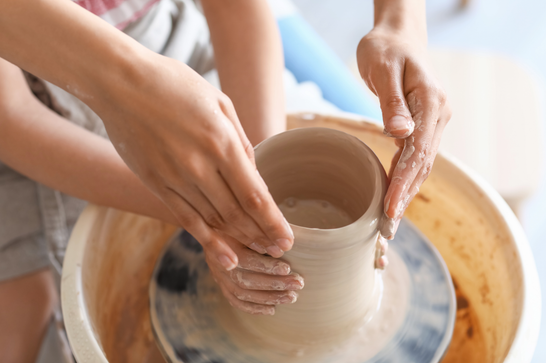
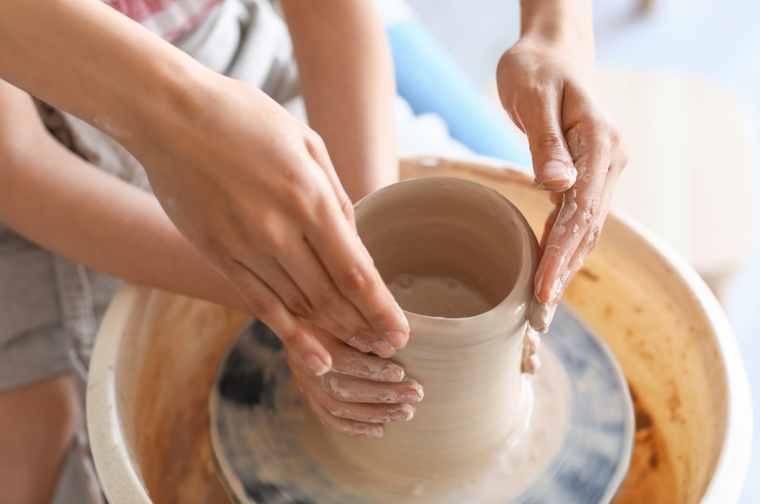
Explore the world of clay together and learn how to make wheel thrown pottery!
What will you learn on this course?
In this 12-week course you will learn how to make wheel thrown pottery in a variety of shapes and forms. This is the perfect oppertuntiy to develop your shared love of pottery, perhaps moving on from a short course.
You will be shown how to prepare clay and how to throw a pot, starting with an array of forms including cylinders, cups and bowls. The course is delivered through a mix of tutor demonstrations and activities designed to allow you to explore clay and work with a potter’s wheel.
You will have the opportunity to explore surface decoration and use a variety of finishing techniques. Learners will be encouraged to review and refine their work in order to produce a number of finished ceramic pieces.
Who is this course for?
This course is suitable for young people aged 8 to 17 years accompanied by their parents or guardians who are looking for an opportunity to enjoy learning together. It is open to all levels.
Please note: Younger children must be supervised by a parent or guardian at all times. Our pottery wheels are designed for adults therefore children must be at least 1m tall and capable of pushing down on the foot pedal. We recommend trying a one-day course first before committing to the full-term program.
The course is accessible for people of all abilities. All classes are planned to meet the specific needs of the group. You do need dexterity in your hands to work with clay. The room is wheelchair accessible.
Age ranges are set carefully to consider key age developments, materials being used, and course stimulus. It is very important that age ranges are not too large or across key stages and therefor need to be adhered to.
Do you need to bring anything?
All materials and equipment are provided.
Are there any additional costs?
The course price includes all materials and the firing of your work.
The course price covers one adult and one child. There is a charge for each additional person (child or adult). At least one adult must be present for every three children.
Who teaches this course?
Rachel Jennings